
Community concerns highlighted in FERC Information Request to MVP Boost
On January 29th, FERC responded to the scoping period for MVP Boost with a detailed environmental information request and required MVP to respond within 15 days.
The request calls for direct responses to three comments made by community members, confirmation and clarification on information filed in the project application, and information that was missing from the initial application. The information that’s been requested will aid FERC in issuing an Environmental Assessment (EA); read the full report.
In the FERC scoping period for MVP Boost, over 80 individuals made public comments highlighting issues such as the project’s effects to groundwater, waterbodies, wildlife, traffic, air emissions, noise and vibration effects, pipeline safety, community health, climate change, and project segmentation. To follow along with the filings on the docket, visit our FERC tracker. FERC has identified three specific comments that MVP is required to address.
In response to MVP’s “Community Engagement Meetings” in West Virginia and Virginia in December 2025, a West Virginia landowner raised concerns about the effectiveness of these meetings in accession number 20251215-5231. Attendance at the West Virginia meetings was extremely low, with only 2 - 6 members of the public present at each meeting. Severe winter weather, hazardous road conditions, mountainous terrain, limited parking, and the selection of very small venues significantly restricted the community’s access and participation. These conditions led many interested landowners and community members to be unable to attend, despite substantial regional concern.
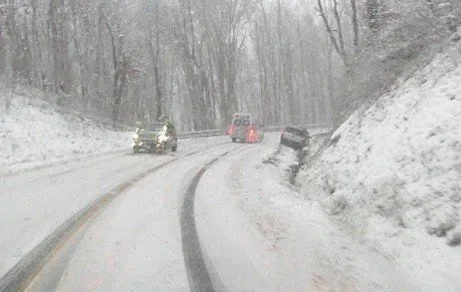
Road conditions detailed in public comment on the way to MVP community meeting - RT 20 between Elton and Meadow Bridge, West Virginia
In addition, FERC Office of Public Participation (OPP) was notably absent from the West Virginia meetings, this significantly disadvantaged those affected by the expansion of the existing compressor stations, despite OPP’s role in facilitating public participation in FERC regulated projects. As a result, the landowner requested that all meetings be rescheduled at accessible times and locations and that FERC conduct scoping meetings in every county along the MVP route to ensure proper public participation.
A family of Roanoke County mainline landowners raised concerns on numerous issues within the project in accession number 20251222-5043. The comment highlights that MVP has improperly segmented the Swann compressor station from the mainline project in violation of NEPA, avoiding full environmental review. The landowners raised serious safety concerns related to increased pipeline volume and pressure, including the lack of updated blast zone analysis, the compromised condition of pipe previously subject to a PHMSA safety order, and the risks of increasing pipeline pressure through steep terrain.
The comment further objects to the siting of the Swann compressor station within a High Consequence Area, inadequate and misleading analysis of alternatives, failure to assess impacts to conserved lands and public drinking water resources, and insufficient notification of consulting parties and landowners along the mainline.
A community member to the proposed Swann compressor station site, requested that the station be powered by electricity rather than methane gas citing the availability of electric power, site character, and environmental justice concerns in accession number 20251121-5121. The comment notes the presence of a 138-kV transmission line and an electric substation within close proximity to the site, neither of which were evaluated in MVP’s alternatives analysis. The commenter further asserts that MVP failed to adequately assess the area’s residential character, development potential, and impacts to a nearby mobile home community, arguing that electric compression would substantially reduce noise and air pollution compared to gas-powered equipment.
These comments make clear that the voices of affected communities cannot be ignored. Community members have raised serious concerns on MVP Boost and provided local knowledge and lived experience, yet gaps remain in MVP’s application and FERC’s review. MVP Boost must be transparent and held accountable to the real impacts on land, water, and people along the pipeline route.
For more information on MVP Boost, visit our page.
To stay connected in the fight against MVP Boost, fill out our interest form.
